

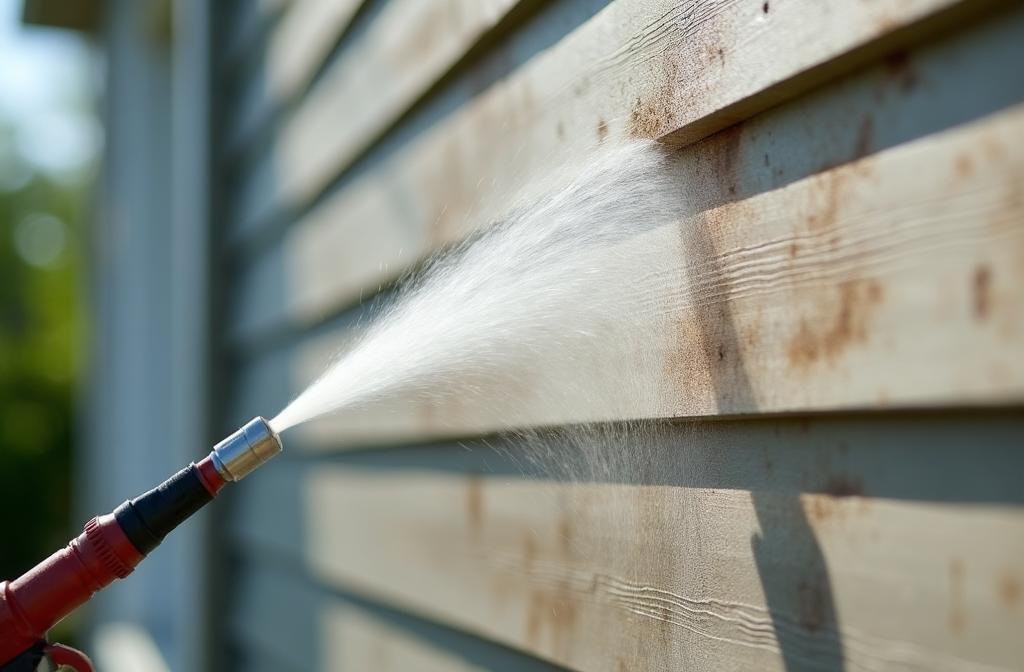
Pressure washing and soft washing are both effective exterior cleaning methods, but they serve different purposes and are suited for different surfaces. Understanding the difference can save you from costly mistakes.
Pressure washing uses high-pressure water (typically 2,500–4,000 PSI) to blast away dirt, grime, and stains. It’s ideal for hard surfaces like concrete driveways, sidewalks, stone patios, and brick walls that can withstand intense water pressure.
Soft washing uses low-pressure water (under 500 PSI) combined with specialized biodegradable cleaning solutions. The chemicals do the heavy lifting, killing mold, algae, and bacteria at the root. This method is essential for delicate surfaces.
Never pressure wash your roof, vinyl siding, stucco, or painted wood surfaces. High pressure can strip granules from shingles, crack vinyl, damage stucco, and peel paint. These surfaces require soft washing for safe, effective cleaning.
At ClearWave, we assess every surface and choose the right method automatically. You don’t need to worry about which technique to request — we’ll always use the safest, most effective approach for your specific surfaces.